
Alamosa County Death Index and Vital Records
Alamosa County sits in the San Luis Valley of southern Colorado. Death records from this area help families and researchers. The county has kept vital records for over a century. You can find certificates from 1900 onward. The state holds older files. The county may have recent ones. This guide explains your options.
Where to Find Alamosa County Death Index Records
Finding death records in Alamosa County takes some planning. The county office may help. The state office surely can. Know where to look first. It saves time and effort.
The Colorado Department of Public Health and Environment holds all state death records. They have files from 1900 to the present day. This is your main source for Alamosa County deaths. You can order online through GoCertificates or VitalChek. You can also mail a request. Or visit their Denver office at 4300 Cherry Creek Drive South, Denver, CO 80246. Call 303-692-2200 for help.
The Colorado State Archives holds older records. Some pre-1908 records exist there. They are limited but worth checking. The archives are at 1313 Sherman St., Room 1B-20, Denver, CO 80203. Their phone is 303-866-2358. Hours are 10 a.m. to 4 p.m., Tuesday through Friday.
The image below shows the Colorado Department of Public Health and Environment vital records page where you can order death certificates online.
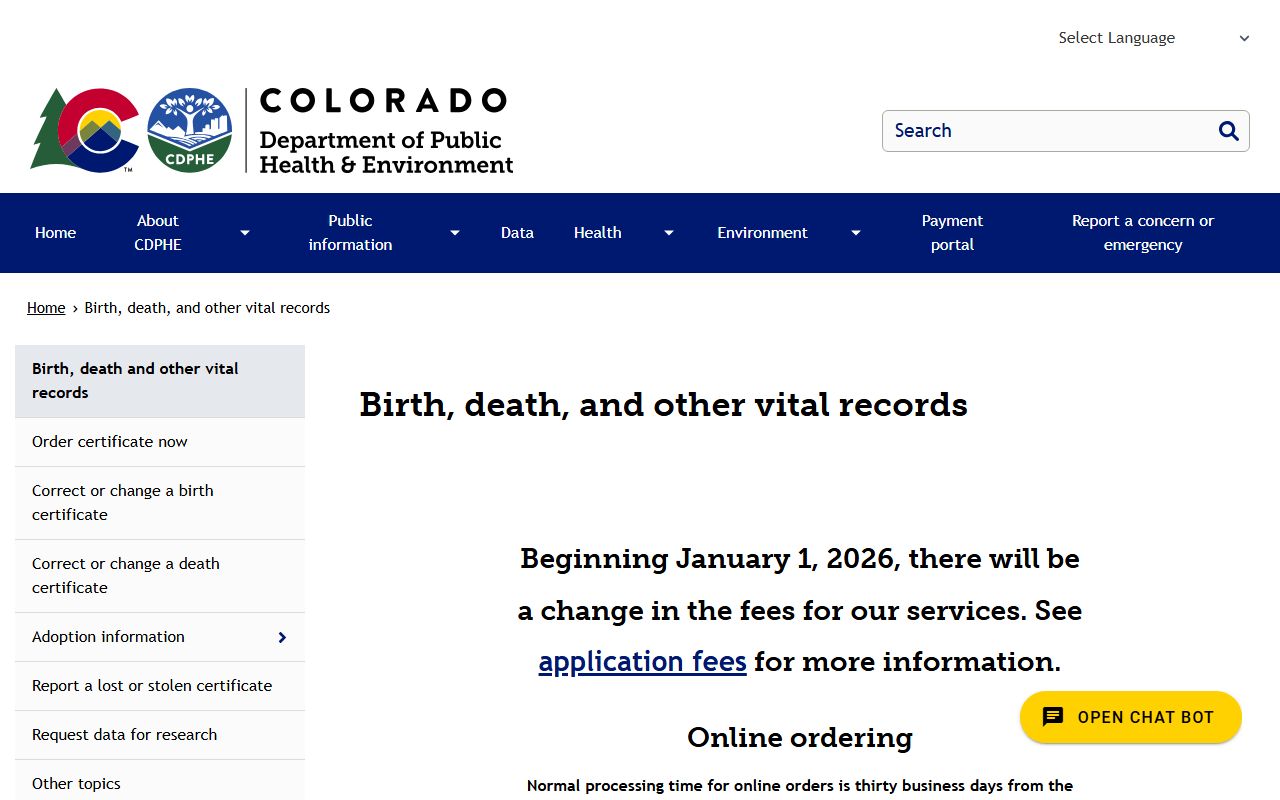
This state office handles death certificate requests for all Colorado counties including Alamosa County and the San Luis Valley region.
Note: The state office is the primary source for Alamosa County death records from 1900 to present.
Types of Alamosa County Death Records Available
Colorado gives you three choices for death records. Each type serves a purpose. Pick the right one. It matters for your needs.
The standard certificate is the full record. It has all medical facts. It lists cause of death. It has all legal items. Most families want this type. It works for legal and personal needs. It costs $25 for the first copy.
The legal certificate costs the same. But it has less info. It shows legal facts only. No medical data appears. No cause of death is listed. Some legal uses need this form. It protects medical privacy.
Verification is the cheapest option. It costs $17. It confirms a death occurred. It gives limited legal facts. It does not include cause of death. C.R.S. § 25-2-117 governs these certified copies and who may obtain them.
Note: Choose the certificate type based on whether you need medical information or just legal confirmation of death.
Alamosa County Death Index Fees and Payment
Costs for death records follow state rates. The fees are the same across Colorado. It does not matter which county. The price is standard.
The first certified copy costs $25. Each extra copy in the same order costs $20. These prices apply to standard and legal certificates. Verification costs $17. There is no discount for extra verifications.
Online orders cost more. GoCertificates and VitalChek add service fees. These range from $10 to $20. Rush shipping costs extra too. Mail orders have no extra fees. But they take longer to process. In-person orders cost the base rate only.
You can pay online at cdphe.colorado.gov/order-certificate-now. Or call GoCertificates at 800-324-6380. Or call VitalChek at 866-632-2604.
Note: Online orders include additional service fees that increase the total cost beyond state certificate fees.
How to Order Alamosa County Death Records
Getting Alamosa County death records is simple. You have three main methods. Each works well. Pick based on your time and budget.
Online is fastest. Use the state-approved services. GoCertificates and VitalChek both work. You need a credit card. You need basic facts about the death. Processing takes about 30 business days. Rush options may exist.
Mail works for those who prefer paper. Send your request to Colorado Department of Public Health and Environment, Vital Records Section, 4300 Cherry Creek Drive South, Denver, CO 80246. Include the full name of the deceased. Include the date of death. Include the place of death. Include your ID and payment.
In-person visits suit urgent needs. Visit the state office in Denver. Hours are 8:30 a.m. to 4:30 p.m., Monday through Friday. Bring valid photo ID. Bring payment. Same-day service may be possible.
Required information for ordering:
- Full legal name of the deceased
- Date of death (month, day, and year)
- City or county where death occurred
- Your government-issued photo ID
- Documentation of your relationship to the deceased
- Payment method (check, money order, or card for online)
Note: Complete all required fields to prevent delays in processing your Alamosa County death record request.
Who Can Access Alamosa County Death Index Records
Colorado limits who can get death records. This is state law. It protects families. It stops identity theft. Know if you qualify.
Immediate family has clear rights. Spouses can order. Parents can order. Children can order. Siblings can order. They must prove who they are. They must prove their relationship. A copy of ID works. A birth or marriage record works too.
The rules changed in late 2024. Grandparents and grandchildren face new limits. They now need court orders. Or they need to prove tangible interest. This is stricter than before. It affects many families. Plan ahead if this applies to you.
Legal representatives can get records. Estate executors can too. Insurance companies have rights. They must show why they need the record. C.R.S. § 25-2-117 sets the rules for access. Death records are not public in Colorado. This protects sensitive personal information.
Note: Access rules changed in October 2024, requiring additional documentation for extended family members.
Alamosa County Death Records for Family History
Genealogists value death records. They contain rich details. Names. Dates. Locations. Family links. Alamosa County has records spanning many decades. The San Luis Valley has deep history. Many families have roots there.
The Colorado State Archives is your best start. They have an online database. It covers many years. Search by name. Search by year. Some records have images. Others need in-person visits. The archives staff can help. They know the collections well.
Records before 1908 are scarce. Colorado did not keep uniform records then. Some church records exist. Some cemetery records help. The Colorado State Archives search tool can guide you. It points to many resources.
Note: Pre-1908 records are limited and may require consulting church or cemetery records for Alamosa County.
Local Resources in Alamosa County
Alamosa County has local offices. They may help with records. The county seat is Alamosa. This is where county offices are located.
The Alamosa County Government oversees local services. They can guide you to the right office. For vital records, the state office is primary. But county staff can answer questions. They know local history too.
The city of Alamosa is the largest in the county. It sits in the San Luis Valley. The valley has many small towns. Each falls under Alamosa County for records. Deaths in these areas get filed with the state. The county does not keep separate records from 1975 onward.
For genealogy, check local libraries. The Alamosa Public Library may have resources. They may have local history files. They may help with research. Local historical societies are another source. They often know family histories. They may have unpublished records.
Note: Local libraries and historical societies may have supplemental genealogical resources not found in official vital records.
Colorado Statutes Governing Alamosa County Death Records
State law controls all death records. These laws apply to Alamosa County. They cover filing. They cover access. They cover retention.
C.R.S. § 25-2-110 requires quick filing. Death certificates must be filed within 72 hours. This happens before final disposition. Funeral directors handle this. They work with doctors. They file with the state. This ensures proper records exist.
C.R.S. § 25-2-111 covers record retention. Records must be kept at least 7 years. Private land burials need special handling. They must be recorded within 30 days. These laws protect public health. They also protect property rights.
Note: Colorado law requires death certificates to be filed within 72 hours of death.